Is ACCA Worth It in India? A Complete 2026 Guide to Salaries, Scope, and Big 4 Placements
7/29/2026

Is ACCA Worth It in India? A Complete 2026 Guide to Salaries, Scope, and Big 4 Placements
The Indian financial services landscape is experiencing an unprecedented shift. Driven by a surging expansion of Global Capability Centers (GCCs) in hubs like Bengaluru, Mumbai, and Hyderabad, Indian corporations and multinational firms are shifting their hiring criteria. The demand for professionals well-versed in International Financial Reporting Standards (IFRS) and global accounting standards has never been higher. Among these international qualifications, the ACCA (Association of Chartered Certified Accountants) credential has rapidly emerged as a premier pathway for finance aspirants. However, committing to ACCA involves navigating a global curriculum, exam fees pegged to the British Pound (GBP), and a serious investment of time and money.
So, is ACCA worth the time and money in 2026?
The direct answer:
YES—if your goal is to work in multinational corporations (MNCs), Big 4 Global Delivery Centers (e.g., EY GDS, Deloitte USI), investment banking back-offices, or if you aspire to build an international finance career.
NO—if your sole ambition is to open an independent tax practice or perform statutory audits for domestic Indian companies.
At-A-Glance 2026 ACCA Salary Summary
Fresher / Affiliate Starting CTC: ₹4.5 LPA – ₹6.5 LPA
Big 4 / GCC Starting CTC: ₹5.5 LPA – ₹8.0 LPA
Qualified ACCA Member (3+ Yrs Exp): ₹8.0 LPA – ₹14.0 LPA
Senior Manager / Director Track (8+ Yrs Exp): ₹22.0 LPA – ₹38.0+ LPA
Total Investment (Exams + Coaching): ₹2.5 Lakhs – ₹3.5 Lakhs
Average Payback Period: Less than 12 months after securing a placement
ACCA Salary in India by Experience Level (2026 Data)
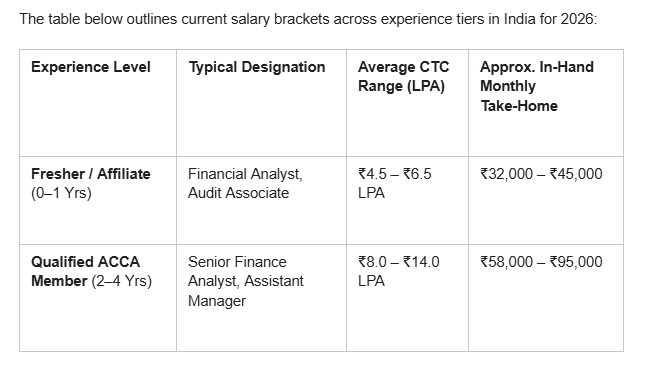
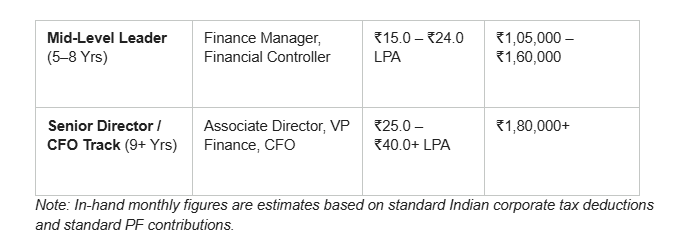
Salaries for ACCA professionals in India are structured primarily around two critical milestones: reaching Affiliate status (passing all 13 exams) and achieving full Member status (completing 36 months of verified Practical Experience Requirement - PER, along with the Ethics and Professional Skills Module - EPSM).
Understanding the Pay Gap: Affiliate vs. Full Member
An ACCA Affiliate has cleared all exam papers but has not yet met the 3-year practical experience requirement. While Affiliates land entry-level roles effortlessly, gaining full ACCA Member status unlocks mid-management bands. Employers reward Members with an immediate 25%–40% hike in compensation, as Members possess both vetted technical mastery and practical workplace competencies.
Big 4 ACCA Salary Breakdown (Deloitte, EY, PwC, KPMG)
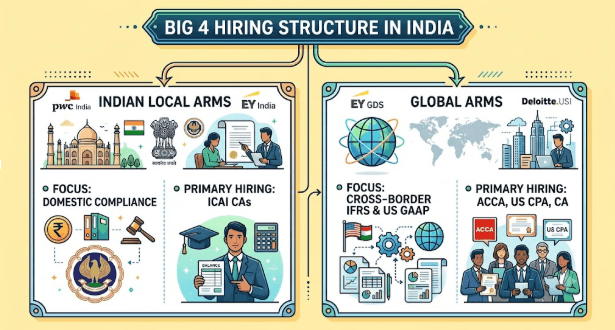
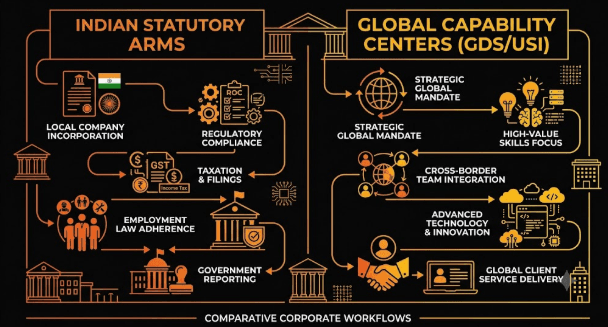
A significant proportion of ACCAs in India are recruited by Big 4 accounting entities. However, candidates must distinguish between Indian Statutory Arms and Global Capability Centers (GCCs / Offshore Delivery Arms).
Local Practice vs. Global Capability Centers (GCCs)
Indian Local Practice Arms (e.g., EY India, PwC India): These entities focus on local statutory audit and domestic tax laws. They prioritize ICAI Chartered Accountants due to Indian statutory signing rights.
Global Capability Centers (e.g., EY GDS, Deloitte USI, PwC SDC, KPMG KGS): These centers handle cross-border financial reporting, international tax, and global audit services using IFRS and US GAAP. ACCAs are hired on equal footing with CAs here.
Big 4 Compensation Structure for ACCAs
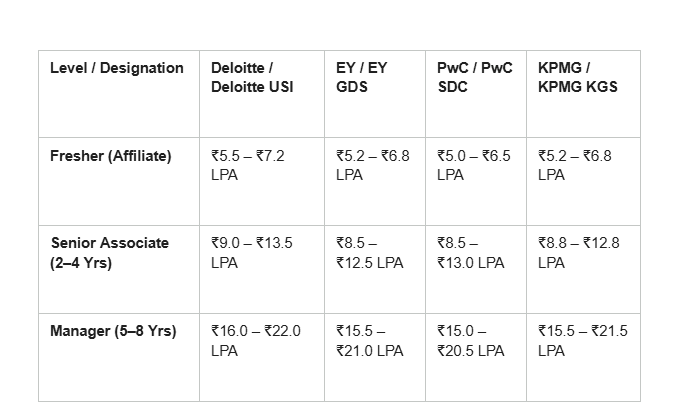
Step-by-Step Big 4 Hiring Workflow for ACCAs
Resume Screening: Prioritizes high first-attempt pass marks, strong performance in Financial Reporting (FR) and Audit and Assurance (AA) papers, and relevant internship experience.
Technical Assessment Test: Covers core IFRS knowledge, consolidation accounting, and scenario-based financial analysis.
Technical Interview (Round 1): In-depth testing on practical accounting standards (e.g., IFRS 15, IFRS 16, Ind AS standards).
Managerial & HR Interview (Round 2): Evaluates communication skills, cultural fit, domain preference (e.g., Statutory Audit vs. FP&A), and business etiquette.
ACCA Scope in India: Top Industries & Regional Pay Variations
High-Paying Corporate Sectors for ACCA
Global Capability Centers (GCCs) & Shared Services: Companies like JPMorgan Chase, Goldman Sachs, HSBC, and Barclays hire ACCAs for core financial modeling, regulatory reporting, and risk management.
IT & Tech Services (MNCs): Firms like Accenture, Genpact, and Infosys deploy ACCAs as finance consultants to manage international client books.
Outsourced Accounting & KPO Firms: Mid-sized outsourcing entities offer roles focused on UK/US client accounts, yielding high entry-level growth.
Location-Based Salary Differentials
Location plays a vital role in determining CTC packages across India:
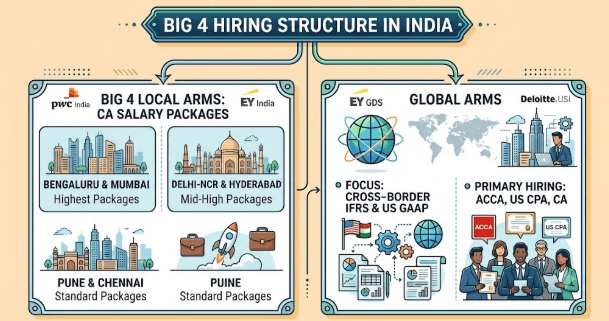
Mumbai & Bengaluru: Offer the highest starting compensation due to a heavy density of financial institutions, GCCs, and corporate headquarters.
Delhi-NCR & Hyderabad: Strong secondary hubs driven by Big 4 service centers and IT shared services.
Tier-2 Cities: Pay scales are generally 20%–30% lower, primarily driven by local firm budgets.
Head-to-Head Comparison: ACCA vs. Indian CA vs. US CPA

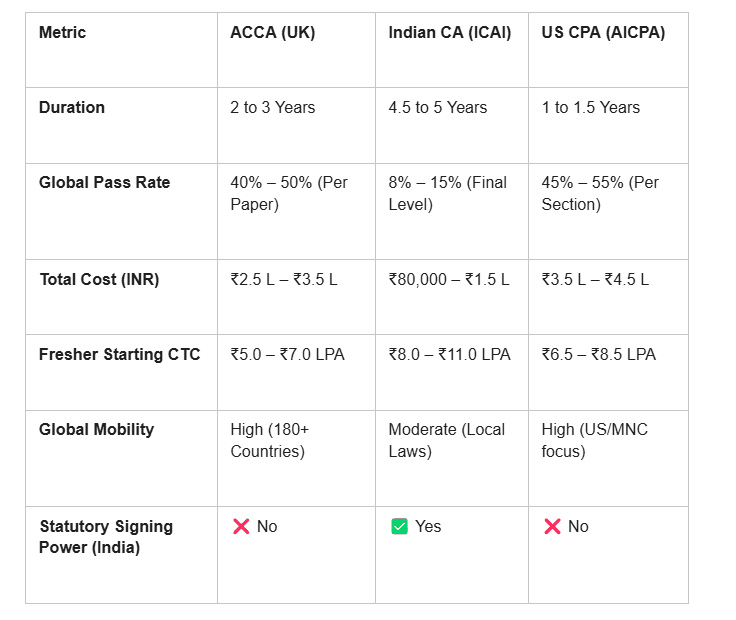
Who Should Choose ACCA?
Students targeting international accounting standards (IFRS).
Candidates wanting flexible, single-paper exam scheduling without group restrictions. Professionals seeking rapid entry into the multinational finance corporate sector.
The Financial ROI Engine: Costs vs. Payback Period
Understanding the true return on investment requires looking at real fee structures alongside initial earning potential.
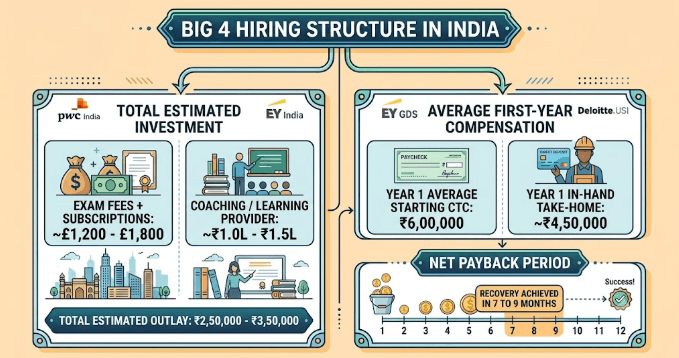

Because entry-level Big 4 and GCC roles offer average starting salaries between ₹5.5 LPA and ₹7.0 LPA, most candidates completely recover their full ACCA education fees within 7 to 9 months of full-time employment.
Who Should NOT Do ACCA? (Candid Reality Check)
Despite its strengths, ACCA is not ideal for every candidate:
⚠️ Critical Warning: Avoid ACCA if you fit into these categories:
Aspiring Indian Tax Practitioners: If you want to set up an independent practice to file local GST, Indian Income Tax, or perform Indian statutory audits, you must pursue the ICAI CA credential. ACCA grants no signing authority under the Indian Companies Act, 2013.
Domestic SME Specialists: Small and Medium Enterprises in India prioritise local statutory compliance over IFRS financial modelling. ACCAs are overqualified and underutilised in this segment.
Unprepared for Foreign Currency Costs: Because ACCA registration and exam fees are pegged to British Pounds (£), currency fluctuations or multiple exam retakes can quickly escalate overall costs.
Frequently Asked Questions
1. What is the starting ACCA salary in India for freshers in 2026?
The average starting CTC for an ACCA fresher (Affiliate) ranges between ₹4.5 LPA and ₹6.5 LPA. Qualified candidates entering Big 4 Global Capability Centers or major MNCs can secure starting packages from ₹5.5 LPA up to ₹8.0 LPA.
2. Can an ACCA earn more than a CA in India?
Yes, in specific domain environments. While a CA generally commands higher pay in domestic statutory audit and Indian taxation roles, an ACCA working in an MNC, Big 4 GCC, or cross-border M&A consulting role can equal or surpass a CA's earnings over time, especially when pursuing international secondments.
3. Can ACCA professionals sign balance sheets or statutory audits in India?
No. Under the provisions of the Indian Companies Act, 2013, only a qualified member of the Institute of Chartered Accountants of India (ICAI) holding a valid Certificate of Practice (COP) can sign audit reports for domestic Indian companies. However, ACCAs frequently sign financial statements for global entities headquartered abroad.
4. Is ACCA recognised by Big 4 accounting firms in India?
Yes. Deloitte, EY, PwC, and KPMG recruit ACCAs extensively. They hire ACCA professionals primarily within their global consulting, valuation, international tax, and offshore audit service centers (such as EY GDS, Deloitte USI, and PwC SDC).
5. How much does ACCA cost in India including exam fees and coaching?
The overall cost of completing all 13 ACCA exams in India (including official registration, annual subscription fees, exam fees in GBP, and coaching classes) ranges from ₹2.5 Lakhs to ₹3.5 Lakhs, depending on exchange rate fluctuations and coaching options chosen.
🚀 Ready to Start Your ACCA Journey?
Join Amit Dharaniya Global Academy today and get access to world-class mentorship, flexible learning, and guaranteed placement support.
Book Demo