ACCA vs MBA vs CA: Understanding the Real Career Difference
1/9/2026
Students and parents often compare ACCA, MBA, and CA as if they are competing versions of the same qualification. In reality, they are designed for very different career outcomes. The confusion usually begins with one question. Which option actually works better for a global finance career?
To answer that honestly, you need to look beyond popularity, exam difficulty, or short-term salary figures. You need to understand where each qualification is recognised, how employers use it globally, and how careers actually progress over time.
This is where the ACCA vs. MBA comparison becomes meaningful.
ACCA vs CA: Global Exposure vs Indian Specialisation
When comparing ACCA vs. CA, the first difference lies in scope.
CA is deeply rooted in Indian taxation, audit laws, and regulatory frameworks. It creates experts who are highly respected in India, especially in statutory audit, compliance, and tax advisory roles. For students planning to build long-term careers within India, CA offers stability and authority.
ACCA, on the other hand, is built for cross-border finance roles. It follows international standards like IFRS and prepares professionals for multinational environments. ACCA is recognised in over 180 countries, including the UK, UAE, Singapore, Canada, and parts of Europe. According to ACCA Global, more than 200,000 members work across global finance roles worldwide.
This global recognition is the biggest differentiator. While CA professionals often need additional qualifications to work abroad, ACCA professionals are already trained for international reporting, ethics, and governance.
If your goal is global mobility, talk to a mentor who understands how international finance careers actually work.
ACCA or MBA: Professional Depth vs Management Breadth
The ACCA or MBA decision often depends on what kind of role you want to play in an organisation.
ACCA focuses on building strong technical finance professionals. Roles typically include audit, financial reporting, risk management, internal controls, and financial analysis. These roles sit at the core of how global companies operate.
MBA programmes focus on leadership, strategy, operations, and decision-making. Graduates often move into consulting, product management, business leadership, or senior corporate roles. However, global outcomes depend heavily on the brand of the business school. A top-tier MBA opens international doors. A lesser-known MBA may not.
For students without prior finance exposure, an MBA alone does not guarantee global finance credibility. Employers still expect strong accounting and reporting knowledge, especially in multinational firms.
This is why many professionals choose to pursue ACCA first and add an MBA later for leadership growth.
Salary Reality: ACCA vs MBA Salary vs CA Salary
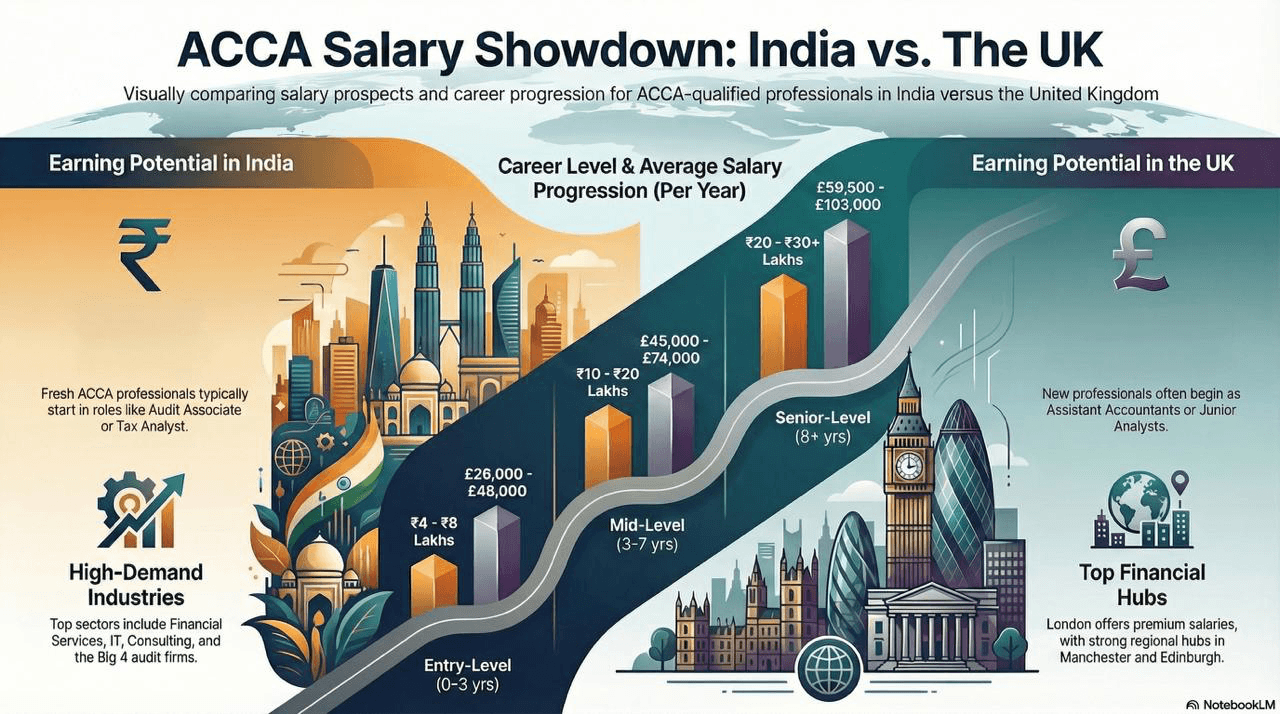
Salary comparisons are often misleading without context. The ACCA vs. MBA salary debate depends on geography, experience, and role type.
Globally, ACCA qualified professionals earn competitive salaries in audit firms, shared service centres, and multinational corporations. According to ACCA salary insights, international ACCA professionals often see faster salary progression due to global demand and mobility.
MBA salaries can start higher, especially from top global schools. However, outcomes vary significantly based on the institute's reputation, industry placement, and networking strength.
In India, ACCA vs. CA salary comparisons show that CAs often start strong domestically, particularly in tax and audit firms. ACCA professionals may initially earn slightly less in India but often surpass local benchmarks once they move into global roles or international assignments.
Long-term earning potential depends less on the qualification name and more on global relevance.
Which Qualification Truly Works for Global Careers
For students targeting international finance careers, ACCA offers a direct and practical pathway. It prepares you for global accounting, audit, compliance, and financial management roles without needing regional retraining.
An MBA works best when combined with a strong finance foundation or pursued from a globally recognised institution. It amplifies leadership potential but does not replace technical finance expertise.
CA remains a powerful qualification within India. For global expansion, it works best when combined with ACCA or an MBA.
The strongest career profiles today are combinations, not single credentials.
If you are unsure which path aligns with your long-term goals, book a one-on-one counselling session to map your journey clearly.
How ADGA Helps You Choose the Right Global Finance Path
Choosing between ACCA, MBA, and CA is not just an academic decision. It is a life decision. At Amit Dharaniya Global Academy, students do not receive generic advice. They receive mentorship from professionals who have worked across global finance roles.
Under the guidance of Amit Dharaniya, India’s first IFRS corporate trainer, students understand how finance careers actually evolve inside multinational companies. ADGA follows a disciplined batch model, focuses on one paper at a time, and prepares students not just to clear exams but to build international careers.
With structured mentoring, global exposure, and placement support, ADGA helps students make confident choices that align with long term outcomes.
Start your global finance journey with clarity. Talk to an ADGA mentor and build a career that travels beyond borders.
🚀 Ready to Start Your ACCA Journey?
Join Amit Dharaniya Global Academy today and get access to world-class mentorship, flexible learning, and guaranteed placement support.
Book Demo